The modern workplace is increasingly mobile, with employees accessing corporate data from smartphones, tablets, and other connected devices. While mobile technology boosts productivity and flexibility, it also introduces security risks, compliance challenges, and management complexities. Without a structured mobile device management policy, organizations expose themselves to data breaches, unauthorized access, and compliance violations.
A well-crafted mobile device management (MDM) policy ensures that only authorized users and devices can access company resources while maintaining security and efficiency. Companies must define clear guidelines for device usage, security protocols, access permissions, and compliance measures.
This guide explores the essential components of a foolproof mobile device management policy, key strategies for implementation, best practices for deployment, and the role of advanced MDM solutions in securing enterprise data. Whether you are starting from scratch or refining an existing policy, these insights will help you build a robust mobile device management strategy that aligns with your organization’s needs and regulatory requirements.
Why a Robust Mobile Device Management (MDM) Policy is Essential
As mobile devices become integral to business operations, managing them effectively is critical. Employees use smartphones, tablets, and other connected devices to access corporate data, whether remotely or in-office. While this enhances flexibility and productivity, it also introduces security vulnerabilities. A mobile device management (MDM) policy ensures that organizations maintain control over their mobile ecosystem, mitigating risks and enforcing mobile device management policy best practices.
The Risks of an Unmanaged Mobile Environment
- Data Breaches: Lost or stolen devices without proper security controls can grant unauthorized users access to sensitive information.
- Malware and Phishing Attacks: Mobile devices are frequent targets for cybercriminals due to inconsistent security configurations.
- Compliance Violations: Regulations such as GDPR, HIPAA, and SEC mandates require strict controls over data access and storage, which an unmanaged device environment may fail to meet.
- Shadow IT: Employees using unauthorized apps or services can expose the company to data leaks, compliance risks, and operational inefficiencies.
An MDM strategy mitigates these risks by enforcing device authentication, encryption, and remote management capabilities. Leading security frameworks, including the mobile device management policy NIST guidelines, outline best practices for securing mobile endpoints and preventing unauthorized access.
By implementing an MDM policy aligned with industry standards, organizations can reduce vulnerabilities, improve compliance, and maintain operational efficiency, ensuring that mobile devices remain assets rather than liabilities.
Core Components of a Foolproof MDM Policy
A mobile device management (MDM) policy must balance security, compliance, and usability to effectively safeguard enterprise data. Organizations should define clear guidelines to regulate device access, enforce security measures, and ensure compliance with industry standards. The following key components form the foundation of a mobile device security policy:
1. Device Enrollment & Authentication
Ensuring only authorized devices can access corporate resources is critical. Organizations should:
- Require mandatory device registration to track and manage all endpoints.
- Enforce multi-factor authentication (MFA) for an added security layer.
- Implement biometric authentication (fingerprint, facial recognition) for enhanced protection.
2. Security & Encryption Standards
Encryption and secure access protocols prevent unauthorized data exposure. Best practices include:
- Enabling full-disk encryption to protect stored data.
- Using secure boot processes to prevent device tampering.
- Requiring VPN or private network access for external connections to corporate systems.
3. Application & Software Management
Unauthorized apps can introduce security risks. Organizations should:
- Restrict access to enterprise-approved applications only.
- Block unverified third-party app installations to reduce attack surfaces.
- Enable real-time malware and threat detection to identify vulnerabilities.
4. Access Controls & Role-Based Permissions
Managing access ensures that employees only use the data necessary for their roles. Organizations should:
- Define user access levels based on job function.
- Implement least privilege access (LPA) to minimize exposure risks.
- Monitor login attempts and unusual activity for early threat detection.
5. Incident Response & Device Management
A proactive incident response strategy reduces downtime and mitigates security threats. Organizations should:
- Enable remote wipe capabilities to prevent data leaks from lost or stolen devices.
- Establish an escalation procedure to handle security breaches effectively.
- Set up real-time monitoring and alert systems to detect and respond to threats.
A well-structured mobile device management policy template ensures consistency across the organization, helping IT teams enforce security protocols while maintaining a seamless user experience.
Key Strategies for Crafting an Effective MDM Policy
A mobile device management (MDM) policy must be strategically designed to align with business objectives while maintaining strong security and compliance. A well-structured policy not only safeguards corporate data but also ensures a seamless user experience. The following key strategies help create a robust and adaptable MDM policy:
1. Align Policy with Business Needs
Every organization has unique mobility requirements. An effective MDM policy should:
- Support remote work, hybrid environments, and BYOD models to enhance flexibility.
- Integrate with existing cybersecurity frameworks to maintain a unified security posture.
- Address industry-specific regulations such as GDPR, HIPAA, and NIST guidelines to ensure compliance.
2. Develop a Clear Policy Template
Standardizing the MDM policy ensures consistent implementation across all departments. Organizations should:
- Use a structured mobile device management policy template to simplify rollout.
- Clearly define device provisioning and security configurations for both company-owned and personal devices.
- Establish acceptable use policies for work-related and personal applications.
3. Balance Security with User Experience
Security measures should not interfere with productivity. To achieve this balance:
- Implement security controls that operate in the background without disrupting workflows.
- Enable Single Sign-On (SSO) authentication to reduce login complexity.
- Provide clear guidelines to employees on best practices for device security.
4. Implement Zero Trust Security
A Zero Trust approach ensures continuous validation of users and devices. Best practices include:
- Requiring verification for every access request, regardless of location or device.
- Applying conditional access policies that factor in risk-based authentication and behavioral analysis.
5. Regularly Review and Update the Policy
Cyber threats evolve, and so should the MDM policy. To stay ahead:
- Conduct quarterly security audits to assess vulnerabilities and gaps.
- Adapt policies based on emerging threats and compliance changes.
- Leverage AI-driven security solutions to automate policy updates and threat detection.
By implementing these key strategies, organizations can ensure that their MDM strategy remains effective, secure, and adaptable to evolving security risks.
Best Practices for Successful Policy Deployment
Designing an MDM policy is only the first step—successful implementation requires strict adherence to best practices. By focusing on training, authentication, remote management, compliance audits, and policy updates, organizations can strengthen security while maintaining operational efficiency.
1. Employee Training & Awareness
A well-informed workforce is the first line of defense against mobile security threats. Organizations should:
- Conduct regular security training to educate employees on phishing risks, secure mobile usage, and corporate policy adherence.
- Implement real-time security notifications to alert users about potential threats and required actions.
2. Enforce Strong Authentication & Access Controls
Unauthorized access is one of the leading causes of mobile security breaches. To mitigate this risk:
- Require multi-factor authentication (MFA) and biometric verification for secure logins.
- Restrict access based on high-risk locations and unrecognized IP addresses.
3. Enable Remote Management & Security Features
In the event of a lost, stolen, or compromised device, rapid response is critical. Organizations should:
- Utilize remote wipe capabilities to remove corporate data instantly.
- Implement device tracking and geo-fencing to prevent unauthorized access outside designated locations.
4. Regularly Audit & Monitor Compliance
Proactive monitoring ensures that mobile security remains aligned with industry regulations and evolving threats. Best practices include:
- Conducting regular internal security audits to assess vulnerabilities.
- Leveraging real-time threat intelligence to detect and mitigate potential breaches.
5. Update Policies Based on Emerging Threats
Mobile security is constantly evolving, requiring continuous policy enhancements. Organizations should:
- Adapt policies in response to new cyber threats and compliance regulations.
- Automate policy updates using AI-driven security solutions for real-time enforcement.
By following these best practices, organizations ensure that their mobile device management policy remains secure, adaptable, and scalable, protecting both corporate data and user privacy.
Tools and Technologies to Support Your MDM Policy
Implementing a mobile device management (MDM) policy requires the right technology stack to ensure security, compliance, and operational efficiency. The following tools and solutions are essential for effective MDM strategy execution:
1. Enterprise MDM Solutions
A dedicated MDM platform enables organizations to centrally manage all mobile endpoints while enforcing security policies. Key capabilities include:
- Automated security updates to protect against vulnerabilities.
- Compliance monitoring to ensure adherence to industry regulations.
2. Endpoint Security & Threat Detection
Mobile devices are frequent targets for cyber threats. Advanced endpoint security solutions help organizations:
- Use AI-powered monitoring to detect malware, phishing, and network anomalies.
- Receive real-time alerts for suspicious activity, enabling rapid incident response.
3. Secure Identity & Access Management (IAM)
Controlling user access is critical for preventing unauthorized data exposure. IAM tools offer:
- Role-based access controls (RBAC) to grant permissions based on job function.
- Single sign-on (SSO) for streamlined authentication and reduced login friction.
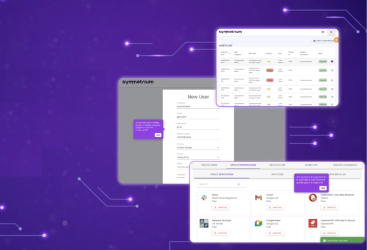
4. Symmetrium’s Mobile Security Solutions
For enterprises seeking high-security, compliance-driven mobile solutions, Symmetrium provides:
- Zero Trust architecture to eliminate implicit trust and continuously verify users.
- Full data encryption to protect sensitive corporate information.
- Policy automation and compliance monitoring, ensuring real-time enforcement of security protocols.
By leveraging these MDM tools and technologies, organizations can maintain full control over mobile devices, mitigate security risks, and ensure seamless compliance with regulatory standards.
Ensuring Compliance with Industry Standards with Symmetrium
A mobile device management (MDM) policy must align with industry regulations to protect sensitive data and avoid compliance penalties. Symmetrium’s security solutions help organizations meet compliance mandates while enhancing mobile security.
1. Meeting Industry-Specific Regulations
Regulatory bodies impose strict security and data protection requirements. Organizations must:
- Ensure compliance with NIST, GDPR, HIPAA, and SEC regulations by enforcing encryption, data access controls, and secure storage practices.
- Implement audit logs and reporting tools to track mobile device activity, ensuring transparency and adherence to compliance standards.
2. Symmetrium’s Security Approach
Symmetrium provides enterprise-grade mobile security, ensuring that organizations meet regulatory expectations while maintaining operational efficiency:
- End-to-end encryption and secure workspaces protect corporate data from unauthorized access.
- Remote policy enforcement and security automation allow IT teams to enforce policies in real time, ensuring that compliance is maintained across all devices.
3. Future-Proofing Your MDM Strategy
As cyber threats evolve and regulatory landscapes shift, organizations need a flexible, scalable MDM solution. Symmetrium helps businesses stay ahead by:
- Adapting policies to emerging security threats and new compliance requirements.
- Using intelligent automation to simplify enforcement and ensure policies remain up to date.
By integrating Symmetrium’s security solutions, organizations can maintain full regulatory compliance, secure their mobile ecosystem, and proactively address future risks.
Conclusion
A foolproof mobile device management (MDM) policy is critical for protecting enterprise data, maintaining compliance, and reducing security risks. Without a structured approach, organizations face vulnerabilities such as unauthorized access, data breaches, and regulatory violations. Implementing security best practices, leveraging advanced MDM solutions, and ensuring continuous monitoring are key to building a resilient mobile security framework.
Symmetrium offers an enterprise-grade MDM solution that streamlines mobile security without disrupting productivity. With zero trust architecture, automated compliance enforcement, and AI-driven monitoring, Symmetrium ensures that your organization stays secure and compliant in an ever-evolving threat landscape.
Ready to strengthen your MDM policy? Book a demo and learn about Symmetrium’s mobile security solutions.