Mobile workforces demand modern data protection
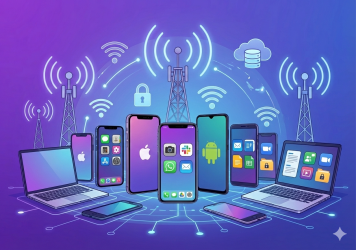
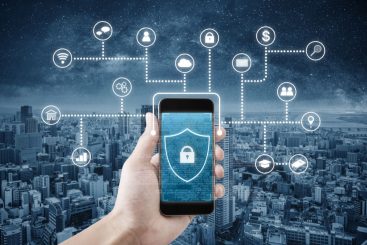
As enterprises lean further into mobility, data increasingly lives and moves across smartphones, tablets, and hybrid endpoints. While these devices unlock convenience and agility, they also widen the attack surface. From real-time messaging to app-based workspaces, sensitive corporate information is flowing through mobile endpoints with limited oversight.
But traditional security methods aren’t keeping pace. Cloud backups, rogue apps, and personal-device behavior bypass outdated MDMs and fragmented agent-based approaches. Meanwhile, regulatory pressure around mobile data privacy is intensifying. In the U.S., state-level regulations around mobile privacy are multiplying, while international frameworks like GDPR and the upcoming EU AI Act are reshaping compliance expectations.
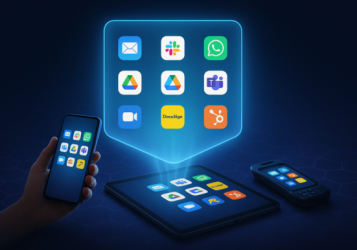
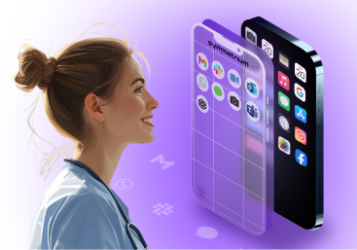
The solution isn’t more monitoring. It’s more control. Symmetrium introduces a data-first approach to mobile data protection: one that isolates sensitive data inside a secure, ephemeral workspace. No data at rest. No personal-device compromise. Total enterprise control.
The hidden risks driving modern mobile data protection
Business-critical data now flows through mobile apps, chat threads, and downloaded attachments. Whether it’s healthcare PHI, financial reports, or authentication credentials, mobile endpoints expose high-value information in everyday use.
Yet organizations often overlook how easily data can leak: screenshots, copy/paste, unsanctioned backups, and app permissions create exposure far beyond malware. Personal devices increasingly mix with corporate access, creating invisible risks that are hard to track or audit.
Outdated operating systems, cloud syncing, and public Wi-Fi all add to the vulnerabilities. These risks are especially concerning in industries with sensitive and regulated data, where mobile data exposure can carry legal and financial consequences.
Read industry analysis on mobile device security
What types of mobile data are at risk?
Mobile risks aren’t limited to downloaded files. Data can live in transient spaces:
- Authentication data: tokens, cookies, access credentials stored by apps or browsers. These are often cached in autofill systems and can be harvested through phishing or compromised apps.
- Cloud-based attachments: PDFs, signed docs, contracts, spreadsheets. These files can be synced across services or left accessible via file managers.
- Business communications: chat logs, voice recordings, calendar entries. Messaging apps and collaboration tools may store sensitive information temporarily or indefinitely.
- Personal-enterprise mix: cross-contamination between personal and corporate apps. For example, sharing files via personal cloud apps or using the same messaging platform for both contexts.
- Shadow data: cloud-synced versions stored outside enterprise control. Often the result of third-party integrations or automatic backups.
Even with MDMs or mobile encryption in place, these categories remain exposed. App-level DLP can’t stop screenshots or clipboard actions. Mobile data protection requires visibility and control inside the workspace itself.
See our mobile security best practices
Identifying current threats to mobile data
Recent research indicates that over half of mobile devices in use globally operate on outdated or unsupported systems, exposing them to critical vulnerabilities. Additional mobile security reports outline the key risk factors:
- App-layer leakage: Sideloaded or vulnerable apps accessing sensitive content. Many apps over-request permissions and access content they shouldn’t.
- Backup risks: Unencrypted auto-sync to iCloud, Google Drive, or other cloud storage. This can inadvertently expose sensitive documents outside the enterprise.
- Outdated OSs: Unsupported devices that can’t receive security patches. These devices are prime targets for attackers.
- Human behavior: Screenshots, file exports, unauthorized app usage. These actions often bypass enterprise controls entirely.
- Lack of visibility: No unified audit trail or policy enforcement. Without proper logging, risky behavior often goes undetected.
The problem is compounded by remote and hybrid work environments, where devices are more likely to be unmanaged, shared, or out of compliance.
These risks aren’t solved by more endpoint agents or heavier device control. Instead, they call for a workspace-level solution: one that governs mobile activity without touching the personal OS.
Explore 2025 Global Threat Report by Zimperium
Best practices for mobile data protection
To truly protect mobile data, organizations must shift from reactive defense to proactive containment. Here are 2025’s best practices:
Data isolation
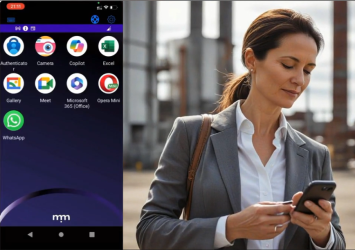
Eliminate data at rest by delivering content inside a Virtual Mobile Workspace (VMW) with no persistence on the local device. No local storage = no lateral exposure. This ensures that even if a device is lost, stolen, or compromised, enterprise data cannot be extracted.
Access control
Enforce granular policies within the workspace: block copy/paste, screenshots, and screen recording. Apply device-agnostic controls tied to identity and workspace state. This enables adaptive risk mitigation regardless of device ownership or operating system.
Compliance & audit
Log every workspace session and action. Assign enterprise-level identities and phone numbers. Provide export-ready audit trails. This simplifies regulatory reporting and internal investigations.
User privacy
Avoid MDMs, agents, or surveillance of personal environments. Symmetrium protects business data without touching the personal OS, ideal for BYOD and shared-device settings.
Dynamic session policies
Adjust access and policy enforcement in real-time based on contextual signals: device posture, location, time of day, and more. This ensures that the workspace responds to risk as it evolves.
Learn how Symmetrium transforms mobile DLP
Read Gartner Peer Insights on Mobile Data Protection Solutions
FAQs: What leaders are asking about mobile data protection
Can mobile data protection solutions help businesses achieve regulatory compliance?
Yes. By isolating sensitive data, logging user actions, and enforcing usage policies, workspace-first solutions like Symmetrium support HIPAA, GDPR, and other mandates.
How does cloud backup impact the security of my mobile data?
If data is stored locally, it may be synced to personal or unmanaged clouds. Eliminating local data through VMW ensures nothing can leak via cloud sync.
Should businesses allow personal devices to access corporate data?
Yes, with VMW, IT controls data flow without compromising privacy.
What role does artificial intelligence play in mobile data security?
AI can aid threat detection, but true protection requires hard boundaries: controlling where data lives, how it’s used, and what actions are allowed.
Are there specific threats unique to wearable devices?
Yes. From Bluetooth sync to ambient recording and sensor leakage, wearables introduce new access vectors. Symmetrium’s workspace boundaries mitigate that risk.
How can IT enforce mobile privacy without overstepping?
Workspace isolation ensures full control over enterprise data without monitoring or interfering with the personal environment—preserving trust and usability.
Can mobile data protection improve user experience?
Yes. By avoiding invasive controls and streamlining access through a unified workspace, users benefit from speed, consistency, and clarity.
Conclusion: Redefining mobile data protection in 2025
Protecting mobile data in 2025 means preventing exposure—not just detecting threats. That requires containing enterprise data inside a secure, controlled workspace, not on personal devices.
Symmetrium’s Virtual Mobile Workspace provides the foundation: zero data at rest, full compliance, and policy enforcement by design. It’s the mobile data protection solution built for the privacy-first, regulation-ready, hybrid workforce.
As mobile-first becomes the enterprise norm, mobile data protection must evolve from traditional control tactics to strategic containment. Virtual Mobile Workspaces are not just a security tool—they’re the new perimeter.