DORA Is Here, Are You Compliant?
The Digital Operational Resilience Act (DORA) is now in effect across the EU, enforcing strict cybersecurity and resilience standards for financial institutions and ICT providers.
Non-compliance isn’t just a risk. It comes with severe penalties, including fines up to 2% of global revenue, regulatory sanctions, and even loss of banking licenses. Financial institutions and their ICT vendors must now ensure robust cybersecurity, rapid incident reporting, and resilience testing, including mobile security.
What’s New with DORA?
Unlike previous regulations of the EU’s financial sector, DORA applies directly to ICT service providers, such as cloud platforms, cybersecurity vendors, and mobile security providers. It mandates:
- 24-72 hour cyber incident reporting delays lead to fines and scrutiny.
- Continuous resilience testing penetration tests, stress testing, and recovery drills.
- Strict third-party risk management financial firms must ensure vendor compliance.
- Comprehensive ICT risk management covering cloud, endpoints, and mobile devices.
Why Mobile Security Is a Compliance Challenge Under DORA
1. Protection and Prevention for Mobile Devices
DORA requires financial entities to implement appropriate security measures for all ICT assets, including mobile devices. However, mobile endpoints introduce unique security gaps:
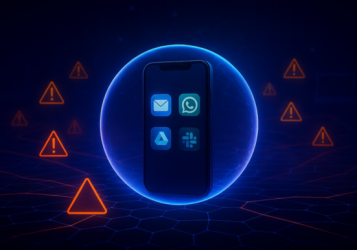
Employees use personal devices for work, creating an unmanaged attack surface that is difficult to monitor and secure. Traditional MDMs (e.g., Intune) provide basic device control but lack security isolation, leaving financial applications vulnerable to unauthorized access. Additionally, many financial apps store data at rest on devices, which increases compliance risks by exposing sensitive information to malware and potential breaches.
📌 Compliance Gap: Standard MDM solutions do not provide full protection against mobile cyber threats like malware, unauthorized access, and data leakage.
2. Backup and Restoration – A Mobile Blind Spot
DORA mandates robust backup and restoration policies to protect financial data.
Mobile devices often lack secure backup mechanisms that keep work data separate from personal device data, making compliance with DORA challenging. This gap makes it difficult for financial institutions to ensure critical data can be securely restored in case of loss or corruption.
Data isolation remains a major concern, as unauthorized access to sensitive information can occur if security measures are not properly enforced, increasing regulatory and operational risks.
Unmanaged backups pose an additional risk, as they can automatically sync organizational data to personal cloud storage systems such as iCloud or Google Drive. Without technical controls to prevent this, financial institutions have no way to ensure that sensitive information isn’t being stored outside of secure environments, creating compliance blind spots and increasing the risk of data leaks.
📌 Compliance Gap: Most MDMs do not separate work data from personal data securely, making recovery and compliance a challenge.
3. Managing Third-Party Risk on Mobile Devices
DORA holds financial institutions responsible for securing third-party access, but third-party risk comes in different forms. Organizations must manage both vendor/supplier risk (software integrations, external services, and supply chain dependencies) and third-party worker risk (external employees or contractors using unmanaged mobile devices). Without strict security controls, both pose significant compliance challenges.
3.1 Vendor and Supply Chain Risk
Financial institutions rely on third-party software vendors, cloud platforms, and security providers to operate. However, these integrations can introduce vulnerabilities if vendors lack strong security controls. Third-party apps may access sensitive financial data without adequate restrictions, increasing the risk of breaches. Additionally, financial institutions are responsible for ensuring vendor compliance. If a supplier fails to meet DORA’s security standards, the financial institution faces penalties and reputational damage.
📌 Compliance Gap: Without strict vendor security policies, financial institutions have limited control over how third-party apps interact with sensitive data, creating compliance and operational risks.
3.2 Third-Party Employees and Unmanaged Mobile Devices
Beyond software and service providers, third-party employees, contractors, and consultants also introduce risks, especially when using personal mobile devices. These unmanaged endpoints often bypass corporate security vetting yet still access critical financial systems. Remote work further complicates oversight, as financial institutions struggle to monitor third-party interactions with sensitive data outside controlled environments.
📌 Compliance Gap: Unmanaged mobile devices used by third-party employees create security blind spots, increasing the risk of unauthorized access and regulatory violations.
Why MDM Solutions Fall Short for DORA Compliance
Traditional Mobile Device Management (MDM) tools like Microsoft Intune provide basic device security but fail to address key DORA requirements:
| DORA Compliance Requirement | MDM Limitation |
| Zero-Trust Security Requirement | 🔻 MDMs focus only on device-level security, leaving gaps in identity and session security. 🔻 Lacks isolated, secure environments for financial transactions, exposing sensitive data to potential threats. |
| Advanced Threat Protection Requirement | 🔻 No real-time behavioral threat detection for malware, phishing, or compromised apps. 🔻 Cannot isolate and contain high-risk activities such as financial transactions, increasing the risk of breaches. |
| Comprehensive Compliance & Reporting Requirement | 🔻 MDMs lack detailed ICT risk assessment tools required for DORA compliance. 🔻 Audit logs and incident reports are basic, falling short of regulator expectations for financial institutions. |
📌 The Bottom Line: MDMs alone cannot meet DORA’s strict security, reporting, and resilience testing requirements for mobile devices.
How Symmetrium Enables Seamless DORA Compliance for Mobile
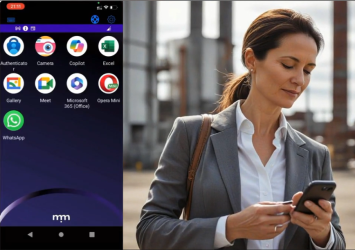
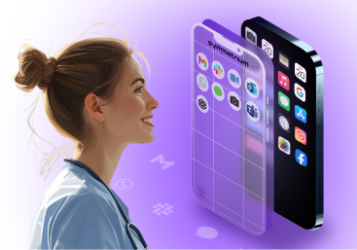
Symmetrium closes mobile security gaps in financial services by ensuring that no data ever resides on the device. It provides a fully functional, remote mobile workspace that is accessed through Symmetrium, delivering full functionality without storing sensitive information locally. This ensures compliance without intrusive device management or disrupting the user experience.
1. Strengthening ICT Risk Management for Mobile Devices
Symmetrium secures mobile devices by addressing BYOD risks, ensuring work applications and data remain protected from breaches through employee devices. It enforces zero-trust access with strong authentication and encryption, allowing only verified users and devices to interact with financial systems. With a no-data-at-rest approach, Symmetrium eliminates local data exposure while providing continuous monitoring and regular risk assessments of mobile ecosystems. These proactive security measures help financial institutions stay ahead of threats without intrusive device management, while also supporting incident response when needed.
2. Enhancing Protection & Prevention Against Cyber Threats
Symmetrium ensures that even if a device is compromised, sensitive financial data remains secure. Its no-data-at-rest architecture prevents work-related data from ever being stored on the device, eliminating exposure to breaches, malware, and unauthorized access. Strong isolation and containerization ensure that a compromised device does not translate into a data breach, while continuous monitoring provides additional oversight.
3. Supporting Incident Detection, Response, and Recovery
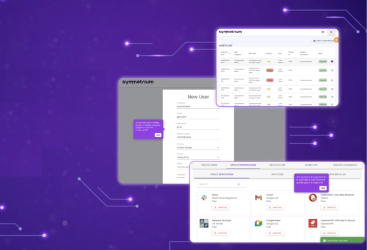
DORA requires rapid detection and reporting of security incidents, and Symmetrium enables organizations to meet this requirement with automated security alerts and real-time monitoring. If an unauthorized access attempt or suspicious activity occurs, Symmetrium triggers instant alerts and provides remote access control to block access to sensitive data. Its seamless disaster recovery features ensure that financial institutions can quickly respond to incidents while maintaining compliance with DORA’s reporting and resilience testing mandates.
4. Ensuring Compliance with Third-Party Risk Management and Attack Surface Reduction
Symmetrium reduces third-party risk by isolating work applications and data from the rest of the BYOD device, ensuring financial systems remain protected regardless of what other apps or services are installed. Its no-data-at-rest architecture eliminates exposure to unauthorized access, malware, or data leaks from unvetted third-party apps. By containing work-related activity within a secure environment, Symmetrium minimizes the attack surface and helps financial institutions meet DORA’s stringent third-party risk management requirements.
DORA Compliance Starts with Securing Mobile Endpoints
DORA sets a new cybersecurity standard for financial institutions and ICT providers. Without securing mobile endpoints, financial firms risk non-compliance, fines, and reputational damage.
Symmetrium delivers a DORA-aligned mobile security framework that meets all regulatory demands—without disrupting workflows or compromising user experience.
Book a demo today and see how Symmetrium ensures seamless compliance.